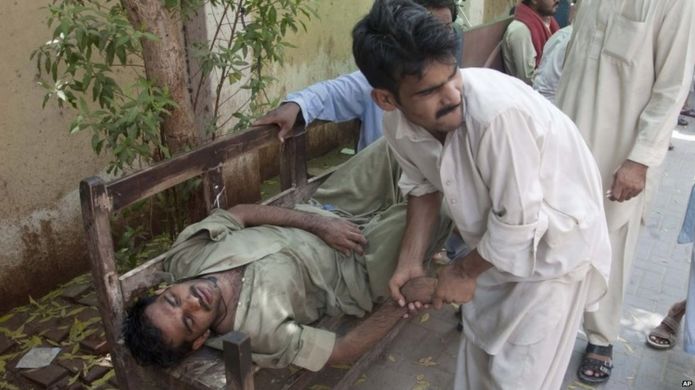
Pakistan's PM Nawaz Sharif has
called for emergency measures as the death toll from a heatwave in
southern Sindh province reached nearly 700.
The army is now being deployed to help set up heat stroke centres, with temperatures reaching 45C (113F).Officials have been criticised for not doing enough to tackle the crisis.
There is anger among local residents at the authorities because power cuts have restricted the use of air-conditioning units and fans, correspondents say.
Matters have been made worse by the widespread abstention from water during daylight hours during the fasting month of Ramadan.
Sporadic protests
On Tuesday, the National Disaster Management Authority (NDMA) said it had received orders from Mr Sharif to take immediate action to tackle the crisis.This came as Sindh province Health Secretary Saeed Mangnejo said 612 people had died in the main government-run hospitals in the city of Karachi during the past four days. Another 80 are reported to have died in private hospitals.
The prime minister had announced that there would be no electricity cuts but outages have increased since the start of Ramadan, he reports.
Analysis: BBC's Shahzeb Jillani in Karachi
There's anger on the street about the government's slow response to the crisis. The provincial PPP government appeared aloof and unresponsive. The federal government of Prime Minister Nawaz Sharif woke up to the tragic deaths on the third day.While politicians blamed each other for not doing enough, the army - always keen to seize opportunities to demonstrate its soft power - sprang into action to set up "heat stroke relief camps".
By the fourth day, a campaign was launched to reiterate steps people should take in sizzling temperatures.
Many in Karachi feel that had the authorities moved proactively many lives could have been saved.
The hope now is that with the expected pre-monsoon rains later in the week the weather will improve. That will certainly provide much-needed respite to millions affected by the heatwave, but it won't change the chronic underlying problems this ever-growing city of 20 million faces - a dysfunctional infrastructure and poor governance.


No comments:
Post a Comment